
Close to 100 participants joined the second TISGRADE Talk on 5 October. The online session focused on how to measure and improve traffic data quality, integrate Traffic Circulation Plans and Temporary Traffic Measures into navigation services, and coordinate National Access Point (NAP) developments across Europe.
Measuring and improving data quality
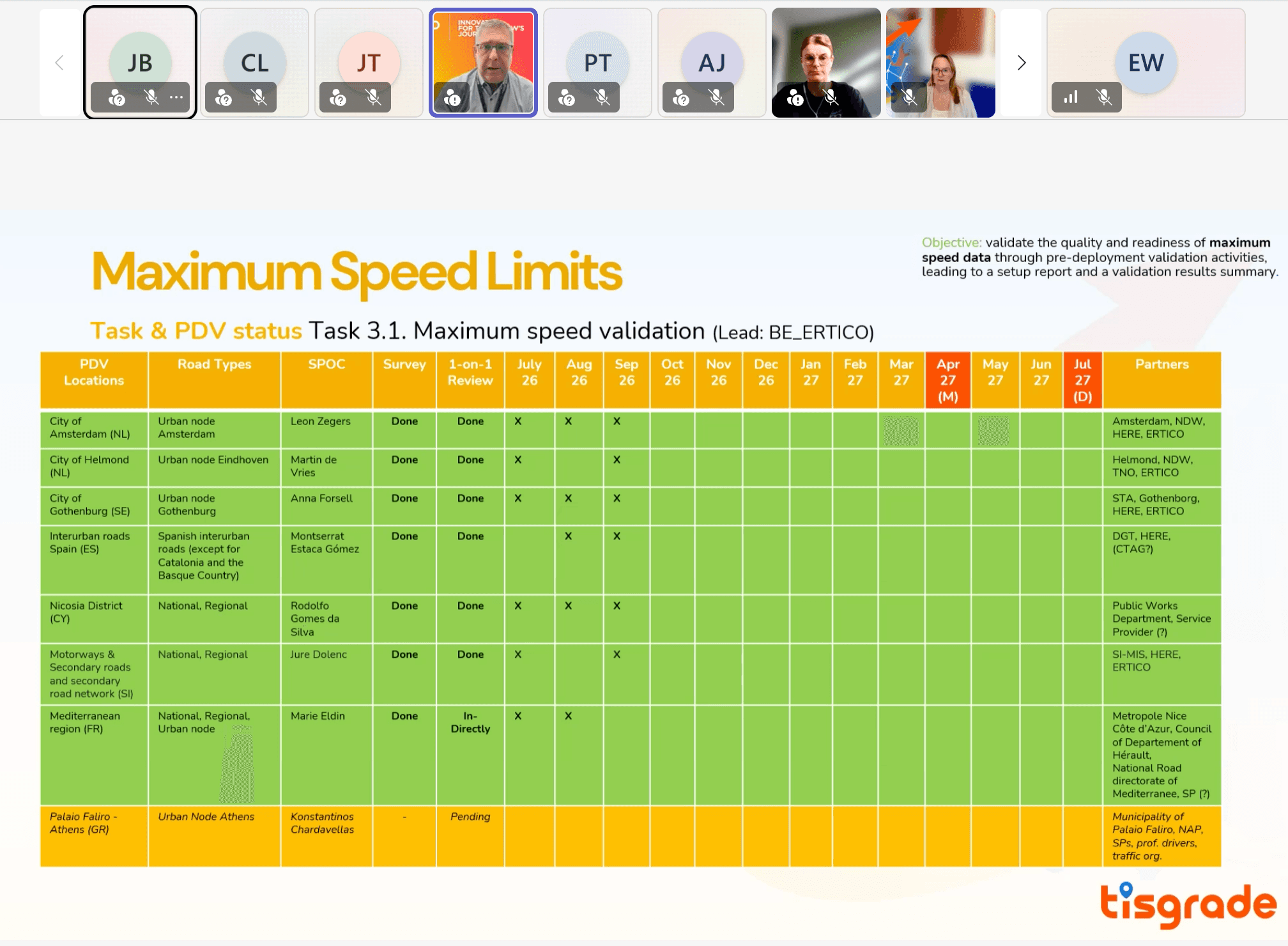
Stephen TSiobbel (ERTICO) presented TISGRADE’s approach to validating the quality and readiness of maximum speed data through Pre-Deployment Validation activities. He explained the objectives and planning of the validation process, including how the reporting is structured in a setup report and a validation results summary. He also showed what the reporting is based on, how it is carried out, and shared some of the first observations. Pieter Pauwels (Be-Mobile) then showed how road works data quality can be validated and improved using a dedicated data validation tool.
Bringing traffic measures into navigation
Melanie Verstraete (Movias) highlighted the importance of digitising Traffic Circulation Plans (TCPs) and Temporary Traffic Management Measures (TMMs). Examples showed how navigation can help avoid cut-through traffic in city centres, guide drivers around school zones and direct trucks via preferred routes. She also addressed the perspectives and drivers of road authorities and service providers, and the role of TISGRADE in helping bridge the gap between public and private parties.
Towards more harmonised NAPs
The session concluded with an update from András Selmeczy (Hungarian Public Roads) on the roadmap for coordinating and harmonising NAPs in terms of standards, data types and formats in line with the recommendations of NAPCORE. TISGRADE will provide technical support and coordination for the individual NAP upgrades, while each Member State remains responsible for its own procurement. A best-practice document will also be made available to countries outside the TISGRADE project.
The discussions showed once again that improving traffic information is not just about technology. It also requires better data quality, closer cooperation between public and private stakeholders, and greater alignment across countries.
Traffic information also requires better data quality, stronger public-private cooperation, and greater cross-country alignment.